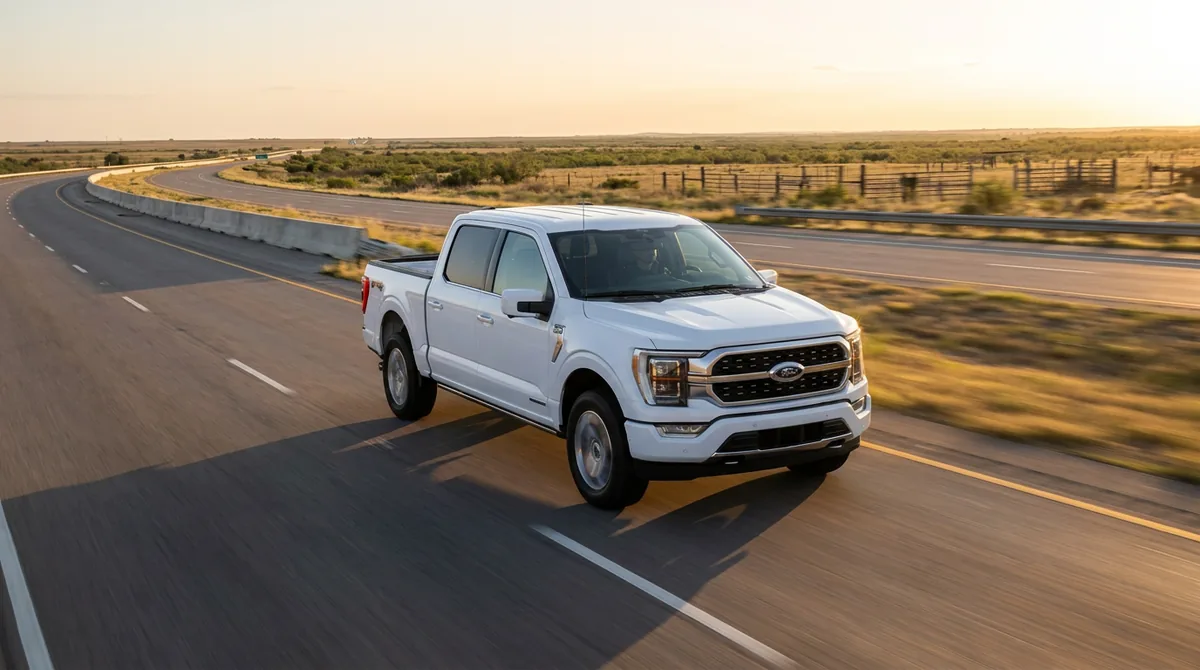
A car loan and a car’s value move at different speeds. The balance drops a little each month; the value can drop much faster. If the car is totaled while the two are far apart, the difference lands on you. That difference is the “gap”.
What do Texas drivers get wrong about a totaled financed car?
Short answerThey assume full coverage pays off the loan, when the policy pays only what the car is worth at the time of the loss, minus the deductible.
The instinct: “Full coverage will pay off the loan if the car is totaled.” It sounds right, because the lender required that coverage.
What’s actually true: the Texas Department of Insurance auto guide (updated December 2025) says insurance companies pay for repair or replacement only up to the car’s actual cash value: the cost to replace it, minus depreciation. TDI’s gap insurance tip puts it plainly: if your car is stolen or totaled, your auto insurance pays what the car is currently worth, not what you originally paid or how much you still owe.
What to do instead: look up your loan payoff, then a realistic value for the car. If the payoff is higher, you have a gap today.
What is gap insurance, and what does it pay?
Short answerGap insurance covers the difference between what you owe on your car and what it’s worth when a covered total loss or theft ends the car’s life before the loan ends.
The Texas Department of Insurance describes the “gap” as the difference between what you owe on your car and what it’s worth, and says you might need gap if your car is worth less than your loan. Here’s the order of events after a total loss on a financed car:
- Your comprehensive or collision coverage pays first. Comprehensive handles losses like theft, hail and flood; collision handles crashes. The payment is the car’s actual cash value, minus your deductible.
- Gap looks at what’s left on the loan. If the payoff is higher than the car’s value, gap is designed to pay that difference, subject to its exclusions.
- Anything gap excludes stays with you, often including your deductible.
Gap works on top of physical-damage coverage, and TDI says a lender will require collision and comprehensive while you owe money on the car. Our guide to Texas car insurance requirements covers what the law and lenders require.

Justin leads the Holley Insurance Agency team, which helps Texas families review their home, auto and life coverage before they need it. Meet Justin and the team.
How much could the gap be on a Texas car loan?
Short answerIt can reach thousands of dollars, according to the Texas Department of Insurance, especially when the down payment was under 20% or the loan runs 60 months or longer.
TDI points out that new cars lose value quickly. When the loan balance falls more slowly than the car’s value, a gap opens:
The setup: a Texas driver finances a car with a small down payment on a 72-month loan. About a year later, a hailstorm or a crash totals it. The loan payoff is $26,000, the insurer values the car at $21,000 actual cash value, and the driver carries a $1,000 deductible.
- Auto policy pays: $21,000 − $1,000 deductible = $20,000, sent toward the loan.
- Still owed: $26,000 − $20,000 = $6,000 on a car that no longer exists.
- With gap that excludes the deductible: gap pays the $5,000 difference between value and payoff ($26,000 − $21,000), and the driver still owes the $1,000 deductible.
- Without gap: the driver owes the full $6,000.
Illustration only. Figures are arithmetic, not a quote, a valuation or a prediction of any claim outcome.
Texas weather makes the total-loss half of this math real: the Insurance Information Institute reports Texas had 902 major hail events in 2025, the most of any state, citing NOAA Storm Prediction Center data. See how comprehensive coverage handles hail.
When might a financed or leased car need gap coverage?
Short answerGap is worth a look whenever you could owe more than the car is worth, most often with a small down payment, a long loan, a lease or old debt rolled into the new loan.
The Insurance Information Institute lists these situations, and TDI names the first two as the ones that can push the gap into the thousands:
💵 Less than 20% down
A small down payment means you start the loan owing close to, or more than, the car’s value.
📅 Loan of 60 months or more
Longer terms pay the balance down slowly while the car keeps depreciating.
🔑 A leased vehicle
The Insurance Information Institute says carrying gap insurance is generally required for a lease. Check your lease agreement first.
🔄 Negative equity rolled in
If you still owed on a trade-in and that balance went into the new loan, you start out further underwater.
📉 Fast-depreciating vehicle
A vehicle that loses value faster than average widens the gap sooner.
✅ When it may add little
A large down payment, a short loan or a payoff well below the car’s value leaves little or no gap to cover.
The test is always the same: if you’re upside down on the loan, gap fills a real hole; if you owe less than the car is worth, there may be no gap to fill.
What doesn’t gap insurance pay?
Short answerMany gap policies reduce what they pay for overdue payments, unpaid finance charges, warranty costs, balloon payments, your deductible and damage from a previous accident, according to the Texas Department of Insurance.
TDI’s gap tip lists the exclusions that can reduce the amount you get:
- Overdue payments. Missed payments still on the balance can reduce what gap pays.
- Unpaid finance charges, warranty costs or balloon payments. A financed extended warranty may not be covered.
- A deductible you have to pay before the insurance pays, as in the example above.
- Damage from a previous accident. If the insurer took money off the car’s value for old unrepaired damage, gap may not make up that amount.
Read closely if you rolled negative equity into the loan: it makes the gap bigger, and whether a product pays all of it depends on its terms and maximum benefit.
Is a dealer GAP waiver the same as gap insurance in Texas?
Short answerNot necessarily: a dealer GAP waiver on a Texas retail installment contract can be a debt cancellation agreement, which Texas Finance Code Chapter 354 says is not insurance and which the state consumer credit regulator oversees.
TDI warns that gap products you get from a car dealer or bank might not be insurance, and TDI can’t help if you have a problem with them. In Texas, the dealer version can be a debt cancellation agreement: the seller or holder of your contract agrees to cancel all or part of what you owe after a total loss or theft.
When that agreement is part of a retail installment contract and requires you to carry insurance on the car, Texas Finance Code Chapter 354 sets the rules. These provisions moved from Chapter 348 into Chapter 354 in 2017. Among them:
- It isn’t insurance (§354.002(d)).
- The charge can’t exceed 5% of the amount financed (§354.002(b)). That’s a legal ceiling, not a typical price.
- Buying it can’t be a condition of the loan. The agreement must say so (§354.004), and a seller may not knowingly offer one if it’s required for credit or if the contract is already protected by gap insurance (§354.006(c)).
- The state reviews the form. Forms go to the Office of Consumer Credit Commissioner for approval (§354.005), and the agreement must say how to complain to that office.
| Question | Gap insurance | Dealer GAP waiver (debt cancellation agreement) |
|---|---|---|
| Is it insurance? | Yes | No, under §354.002(d) |
| Who oversees it? | Texas Department of Insurance | Office of Consumer Credit Commissioner (form approval, complaints) |
| How you pay | As part of an insurance policy | A single charge (§354.006(e)), capped at 5% of the amount financed |
| Required to get the loan? | Optional, per the CFPB | No; the agreement must say purchase isn’t required |
| Cancelling | Cancel when you owe less than the car is worth (TDI) | Full refund within 30 days if no loss; refund or credit on early payoff (§354.007) |
The Consumer Financial Protection Bureau (March 2024) adds that financed GAP is rolled into the loan amount, which increases the total interest you pay.
Can you cancel gap coverage and get a refund in Texas?
Short answerYes, generally: TDI says to cancel gap insurance once you owe less than the car is worth, and Texas law gives debt cancellation agreements a 30-day full-refund window and a refund or credit when you pay off early.
For gap insurance, TDI says to cancel when you owe less than your vehicle is worth, which usually takes about two years, or if you pay off the loan early or sell the vehicle. For a debt cancellation agreement under Chapter 354:
- 30-day cancellation. If no total loss or theft has happened, you can cancel by the 30th day after the contract date or the agreement’s issue date, whichever is later, for a refund or credit of the entire fee (§354.007(c)).
- Early payoff. A refund or credit is based on the earliest of events such as paying the contract in full early or your request to cancel (§354.007(a)), and the agreement must explain how it’s calculated (§354.004).
The CFPB adds that you may be entitled to a refund if you sell, refinance or prepay your auto loan.
What should you ask before you add gap coverage?
Short answerAsk whether it’s insurance or a debt cancellation agreement, what it costs in total, what it excludes, whether it pays your deductible and how you cancel and get a refund.
At the dealership or on your auto policy, these questions keep the decision honest:
- Is this insurance or a debt cancellation agreement? That decides who handles a complaint.
- What’s the total cost, including interest if it’s financed?
- Does it pay your deductible, and what else is excluded? Check overdue payments, financed warranties and negative equity.
- Is there a maximum benefit? Ask for it in writing.
- Does your lease or loan already include gap protection?
- How do you cancel, and how is the refund figured?
When we review coverage on a financed or leased car, we start with what the lender requires, then the deductibles, then the gap question. Ask us whether your auto policy offers a gap or loan and lease payoff option; availability and terms depend on the policy and vehicle. For deductible trade-offs, see our guide to lowering Texas car insurance costs without dropping needed coverage, or our Texas auto insurance page.
Frequently asked questions
Does gap insurance pay my car insurance deductible?
Often, no. The Texas Department of Insurance’s gap insurance tip (updated October 2024) lists a deductible you have to pay before the insurance pays among the exclusions that can reduce what a gap policy pays. That means after a total loss, your own comprehensive or collision deductible may still be yours even when gap covers the rest of the loan. Some gap products treat the deductible differently, so check the exclusions section of the policy or waiver before you rely on it. If you carry a high deductible, make sure you could pay it from savings.
Do I need gap insurance on a leased car in Texas?
You may already be required to have it. The Insurance Information Institute says carrying gap insurance is generally required for a lease, and that a new vehicle depreciates the moment it leaves the lot. Before you buy anything, read your lease agreement to see whether gap protection is already part of it, because buying a second product could mean paying twice for the same shortfall. If you must buy it yourself, ask the leasing company what it accepts, then ask us whether your auto policy offers a gap or loan and lease payoff option.
Can a Texas dealer require me to buy a GAP waiver to get a car loan?
Not for a debt cancellation agreement covered by Texas Finance Code Chapter 354. Under section 354.004, the agreement itself must state that buying it is not required to get credit and won’t be a factor in the credit decision, and section 354.006 says a seller may not knowingly offer one if buying it is required to get the loan. The federal Consumer Financial Protection Bureau (March 2024) also calls GAP an optional product and says that if a dealer or lender tells you it’s required, check your contract or ask the lender. If it’s optional, you can decline it.
What happens to my gap coverage if I refinance my car loan?
Refinancing pays off the original loan, so gap protection tied to that loan usually stops being useful. The Consumer Financial Protection Bureau says you may be entitled to a refund of an optional GAP product if you sell, refinance or prepay your auto loan. For a Texas debt cancellation agreement, section 354.007 of the Finance Code bases the refund or credit on the date of events such as paying the contract off early. Your new loan has its own balance, so check whether you still owe more than the car is worth.
Is gap insurance worth it on a used car?
It depends on the numbers, not on whether the car is new. The Texas Department of Insurance says the gap can reach thousands of dollars if your down payment was less than 20% or you financed for 60 months or more, and both can happen with a used car. Look up a realistic value for the car, compare it with your loan payoff, and see whether you’d owe more than the car is worth if it were totaled tomorrow. If the payoff is well below the car’s value, gap may add little.
The Bottom Line
Gap insurance pays the difference between your car’s actual cash value and what you still owe on the loan or lease after a covered total loss or theft. In Texas, it matters most with a small down payment, a long loan, a lease or rolled-in debt, and it often excludes your deductible and overdue payments.
Check your payoff against the car’s value, read the exclusions, and know whether you’re holding insurance or a dealer’s debt cancellation agreement. Holley Insurance Agency, a licensed Texas agency based in Killeen, will review your auto coverage and deductibles with you and talk through the gap question, free. Call (254) 669-6522, Mon–Fri 8–5 CT.
Written by the Holley Insurance Agency team and reviewed by Justin Holley, a licensed Texas insurance agent. Based at 1801 Trimmier Rd, Killeen, serving families across Texas. Figures come from the sources named above and are reviewed quarterly. Coverage descriptions are general: your policy’s forms, endorsements and declarations, and any agreement’s terms, control. Texas insurance regulator: Texas Department of Insurance.
Last reviewed by the Holley Insurance Agency team on October 21, 2026. Sources: TDI gap tip (October 2024) and auto guide (December 2025); Texas Finance Code Chapter 354; OCCC; CFPB (March 2024); Insurance Information Institute. Dollar examples are arithmetic, not quotes.