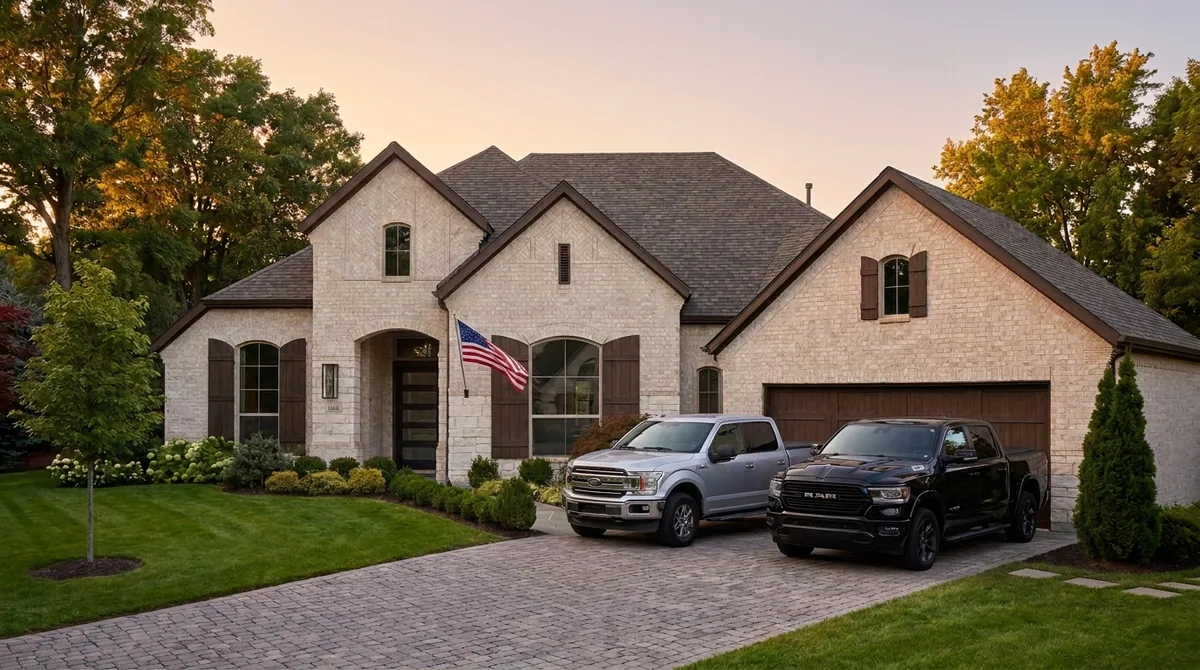
Bundling home and auto insurance in Texas means holding both policies with one company, and the real question isn’t whether a discount exists but whether the bundle still protects your house, your cars and your savings once every limit and deductible is lined up.
What do Texas households get wrong about bundling home and auto insurance?
Short answerMany assume a bundle is automatically the better deal, when the price can drop because coverage quietly changed, and a discount is never a promise until the company confirms it applies to you.
The instinct: “One company, one discount, lower bill. Done.”
What’s actually true: a multi-policy discount is something each company decides for itself, and a lower combined price can come from a higher deductible, lower liability limits or a dropped coverage instead. The number that matters is the total for both policies at the coverage you actually need.
What to do instead: check that the bundle carries the same limits, deductibles and coverages you have now, then look at price.
What does it mean to bundle home and auto insurance in Texas?
Short answerBundling means holding your homeowners policy and your auto policy with the same insurance company, which may make the household eligible for a multi-policy discount on one or both policies.
The Texas Department of Insurance (TDI) describes it in plain terms: you could get a discount for having two or more policies, like home and car, with the same company, also called a bundling discount (TDI tip, updated December 18, 2025).
A bundle doesn’t merge your coverage into one contract. The home policy still covers the house, belongings and liability at home; the auto policy keeps its own liability, PIP and uninsured motorist coverage, each with its own declarations page.
Renters and condo owners can ask the same question about pairing their policy with auto; see what renters insurance costs in Texas.

Justin leads the Holley Insurance Agency team, which helps Texas families review their home, auto and life coverage before they need it. Meet Justin and the team.
How does a multi-policy discount work in Texas?
Short answerIt’s a discount a company may offer when you hold more than one policy with it, and the Texas Department of Insurance says each company decides which discounts to offer and how large they are.
TDI’s homeowners insurance guide (updated June 1, 2026) and its auto insurance guide (updated December 11, 2025) both list “other policies with the same insurance company” among possible discounts, and both say each company decides what discounts to offer and the amount of the discount.
That’s why we don’t put a percentage on it. Ask these questions about any multi-policy discount:
- Which policy gets it? The discount may apply to the home side, the auto side or both.
- What qualifies? Ask which policy types count toward it, such as renters, condo or a personal umbrella.
- What keeps it? Ask what happens to the discount if one policy ends or changes.
- How does it stack? Ask how it works with discounts you already have.
The honest scorecard is the household total: a discount on one policy means little if the other costs more or covers less. Our guide to what Texas homeowners insurance costs explains the factors that drive the home side of that total.
What are the benefits of bundling besides price?
Short answerBeyond any discount, a bundle can mean one company and one point of contact for the household’s main policies, which can make reviews, changes and questions simpler to handle.
TDI’s discount tip names this benefit directly: with a multi-policy setup, “you also get the benefit of working with one insurance company instead of multiple.” Here’s what that can look like day to day:
One agent and one company for the house and the cars.
Home and auto limits get looked at together, so gaps are easier to spot.
Ask whether the renewal dates can be lined up so nothing slips.
Ask whether both policies can share a billing account or payment date.
Easier to see whether home and auto liability limits fit what you own.
A move, a new driver or a new car means one call instead of two.
One caution: TDI’s auto guide mentions six-month auto policies, so home and auto terms may not run on the same schedule. When we review policies with Texas households, we put both declarations pages side by side so the liability limits make sense together.
Can a company require you to bundle home and auto insurance in Texas?
Short answerNo, Texas law makes it an unfair practice for a company to make issuing or renewing your home policy depend on buying its auto policy, or the other way around, for policies covered by the law.
The rule came from Senate Bill 213, which TDI’s legislative bulletin (August 5, 2025) summarizes as prohibiting mandatory bundling of residential property and personal auto policies, effective September 1, 2025. It’s now Texas Insurance Code §551.254, which says it’s an unfair or deceptive act to make the issuance, delivery or renewal of either policy contingent on buying the other from the same insurer or an affiliated insurer.
Under §551.253, three kinds of policies are outside the rule: policies from the state’s coastal windstorm association, National Flood Insurance Program flood policies and personal umbrella policies. That matters on the Gulf Coast, where TDI says a home policy might not cover wind and hail. Bundling is your choice; if you’re told otherwise, contact TDI.
What are the downsides to watch for when you bundle?
Short answerThe biggest risk is a bundle priced lower because coverage was cut, followed by questions about how a claim or a cancelled policy could affect the other policy or the discount.
The risk is what can change while everyone is focused on the price:
- Coverage trimmed to hit a number. Higher deductibles, lower liability limits, actual cash value in place of replacement cost, or a rejected coverage can all lower a price. TDI’s homeowners guide says that to be fully protected, you should make sure your policy has replacement cost coverage; our guide to replacement cost vs. actual cash value explains the difference.
- A claim on one policy. Ask whether a claim on the auto policy could affect the home policy’s price or the multi-policy discount, and the reverse. The answer depends on the company’s rules.
- Ending one policy later. If you sell the house, move into a rental or drop a car, ask what happens to the discount on the policy you keep.
- Deductibles raised too far. A higher deductible means paying more of each claim yourself, so keep it within your emergency fund.
The setup: a family outside Fort Worth holds a homeowners policy with a $350,000 dwelling limit and a 1% wind and hail deductible, plus auto liability of 100/300/100 with uninsured motorist coverage at the same limits. A bundle offer comes back with a lower total.
- Home side: the offer shows a 2% wind and hail deductible. On a $350,000 limit, that’s $7,000 out of pocket on a covered hail claim, up from $3,500.
- Auto side: liability drops to the Texas minimum of 30/60/25, and uninsured motorist coverage is marked rejected.
- The lesson: part of the lower price came from $3,500 more deductible risk on the house and much lower auto protection, not from a discount.
Illustration only. Deductible figures are arithmetic, not a quote, and no premium or discount amount is implied.
If hail is the worry, our guide to percentage wind and hail deductibles shows how to turn a percentage into dollars. On the auto side, what full coverage means in Texas and uninsured motorist coverage cover what not to give up.
What other policies can join a home and auto bundle?
Short answerDepending on the company, renters, condo, umbrella, motorcycle and other policies may count toward a multi-policy discount, so ask which ones qualify before you assume they do.
Fair questions to ask about any bundle:
- Renters or condo instead of homeowners? TDI’s guide says renters insurance covers your belongings in a rented home, and condominium insurance covers your personal property and the interior of your unit. Ask whether either counts like a homeowners policy.
- A personal umbrella? TDI notes you can buy a separate umbrella liability policy if you want more liability coverage than your home policy provides. Ask whether an umbrella fits with your bundle and what underlying limits it expects.
- A motorcycle, boat or RV? Ask whether these count toward the household discount. Availability depends on the vehicle and the policy.
- Flood coverage? TDI says most home policies don’t cover flood, and most flood policies have a 30-day waiting period, so flood is a separate decision either way.
Ask us whether a given policy can join your household setup. Our condo insurance and motorcycle insurance pages describe those coverage options.
What should you check before bundling home and auto insurance?
Short answerPut your current declarations pages next to the bundle offer and confirm that every limit, deductible and coverage matches before you weigh the total cost of both policies together.
This is the side-by-side we do in a coverage review:
| Item | Where to find it | Why it matters |
|---|---|---|
| Dwelling limit | Home declarations, Coverage A | It should match the cost to rebuild, not the sale price |
| Wind and hail deductible | Home declarations | A percentage can mean thousands of dollars per claim |
| Replacement cost or actual cash value | Home declarations and endorsements | Changes how much a roof or belongings claim pays |
| Auto liability limits | Auto declarations | Protects your savings if you cause a serious crash |
| PIP and uninsured motorist | Auto declarations or signed rejection forms | Both apply unless rejected in writing |
| Collision and comprehensive deductibles | Auto declarations | TDI says a lender will require both if you still owe money on the car |
| Discount conditions | Ask the company or agent | Know what keeps or ends the multi-policy discount |
The auto rules behind those rows are in Texas car insurance requirements. If price started the conversation, see lowering car insurance costs in Texas for safer levers than cutting liability.
Frequently asked questions
If my home and auto are bundled, can a car accident claim affect my homeowners policy?
It depends on the company. A bundle generally leaves you with two policies, each with its own coverage, limits and deductibles, so an auto claim is paid under the auto policy and a home claim under the home policy. The Texas Department of Insurance homeowners guide lists having no claims for three years among possible home insurance discounts, and each company sets its own discount rules. Before you bundle, ask whether a claim on one policy could change the other policy’s price or the multi-policy discount.
What happens to a multi-policy discount if I sell my house and keep the car insurance?
Ask before you sell. If the discount depends on holding two or more policies with the same company, ending the homeowners policy may change the price of the auto policy you keep, because the condition for the discount is gone. Each company decides how its discounts work, according to the Texas Department of Insurance, so the answer comes from your company’s rules, not a general formula. If you’re moving into a rental or a condo, ask whether a renters or condo policy would count toward the discount instead.
Do bundled home and auto policies have to renew on the same date?
Not necessarily. A bundle can include policies with different terms and renewal dates. The Texas Department of Insurance auto guide mentions six-month auto policies, while a homeowners policy may run on a different schedule, so your two renewals may not line up on their own. Ask whether matching dates is possible, so both policies get reviewed together. Whatever the dates, read each renewal notice, because a change in limits, deductibles or discounts on one policy won’t show up on the other policy’s paperwork.
Is it legal for a Texas insurance company to require me to buy auto insurance to keep my home policy?
No, not for policies covered by the law. Texas Insurance Code section 551.254, added by Senate Bill 213 and effective September 1, 2025, makes it an unfair or deceptive practice to make issuing, delivering or renewing a residential property policy contingent on buying a personal auto policy from the same insurer or an affiliate, and the same rule applies in reverse. Section 551.253 exempts coastal windstorm association policies, National Flood Insurance Program policies and personal umbrella policies. Choosing to bundle for a discount is still allowed. If you think a company tied the two, contact the Texas Department of Insurance.
Does bundling home and auto insurance mean one deductible and one bill?
Not automatically. Bundling generally means two policies with the same company, and each one keeps its own deductibles. The Texas Department of Insurance homeowners guide notes you might have different deductibles for each type of coverage, and your auto policy carries its own collision and comprehensive deductibles, which are separate from anything on the home side. Billing depends on the company, so ask whether the policies can share one account or payment date. If you hear a bundle has one shared deductible, ask to see that wording in the policy.
The Bottom Line
Bundling home and auto insurance in Texas may earn a multi-policy discount, but each company decides whether it applies and how much. A bundle is worth it when both policies keep the coverage your household needs and the total cost works for you.
Since September 1, 2025, Texas law says a company can’t require you to buy home and auto together. Before you bundle, line up limits, deductibles and coverages, then look at the total. Holley Insurance Agency, a licensed Texas agency based in Killeen, will review your home and auto with you for free. Call (254) 669-6522, Mon–Fri 8–5 CT.
Written by the Holley Insurance Agency team and reviewed by Justin Holley, a licensed Texas insurance agent. Based at 1801 Trimmier Rd, Killeen, serving families across Texas. Figures come from the sources named above and are reviewed quarterly. Coverage descriptions are general: your policy’s forms, endorsements and declarations control. Discount availability and amounts are set by each company. This guide is insurance education, not legal advice. Texas insurance regulator: Texas Department of Insurance.
Last reviewed by the Holley Insurance Agency team on November 17, 2026. Discount, renters, condo, umbrella, flood, coastal wind and replacement cost guidance comes from the Texas Department of Insurance homeowners guide (June 1, 2026), auto guide (December 11, 2025) and home discount tip (December 18, 2025); the forced-bundling rule from Texas Insurance Code §§551.253 and 551.254 and TDI bulletin B-0012-25 (August 5, 2025). Deductible figures are arithmetic illustrations, not quotes.